HomeWasp classificationExpeditionsLinksFigWebBiodiversity ExplorerPermits

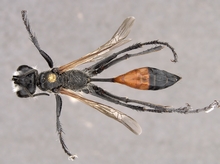
Podalonia canescens (Dahlbom)

(Life: Kingdom: Metazoa (animals); Phylum: Arthropoda; Class: Hexapoda; Order: Hymenoptera; Superfamily: Apoidea; Family: Sphecidae; Subfamily: Ammophilinae; Genus: Podalonia)

Podalonia canescens (Dahlbom, 1843)

Podalonia canescens canescens (Dahlbom, 1843)


Podalonia canescens madecassa (Kohl, 1909)

Distribution

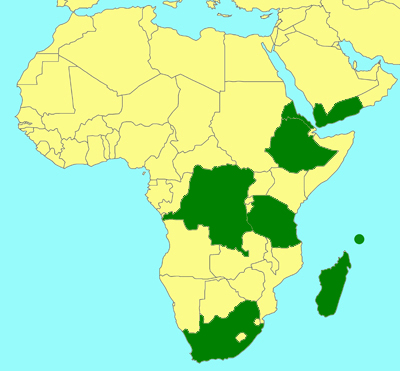
Aldabra Islands, Democratic Republic of Congo, Eritrea, Ethiopia, Madagascar, Seychelles, South Africa, Tanzania, Yemen.

Biology

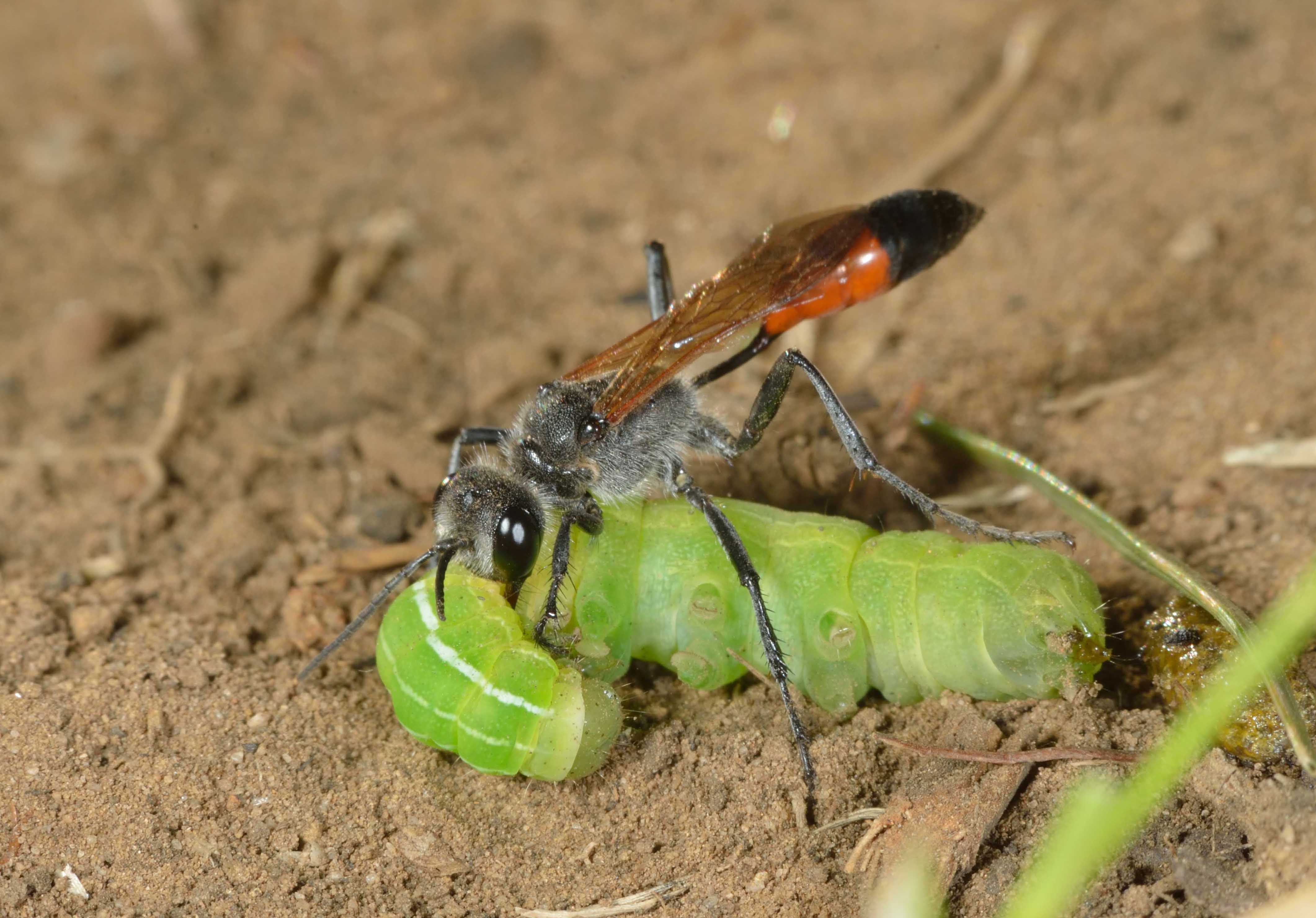
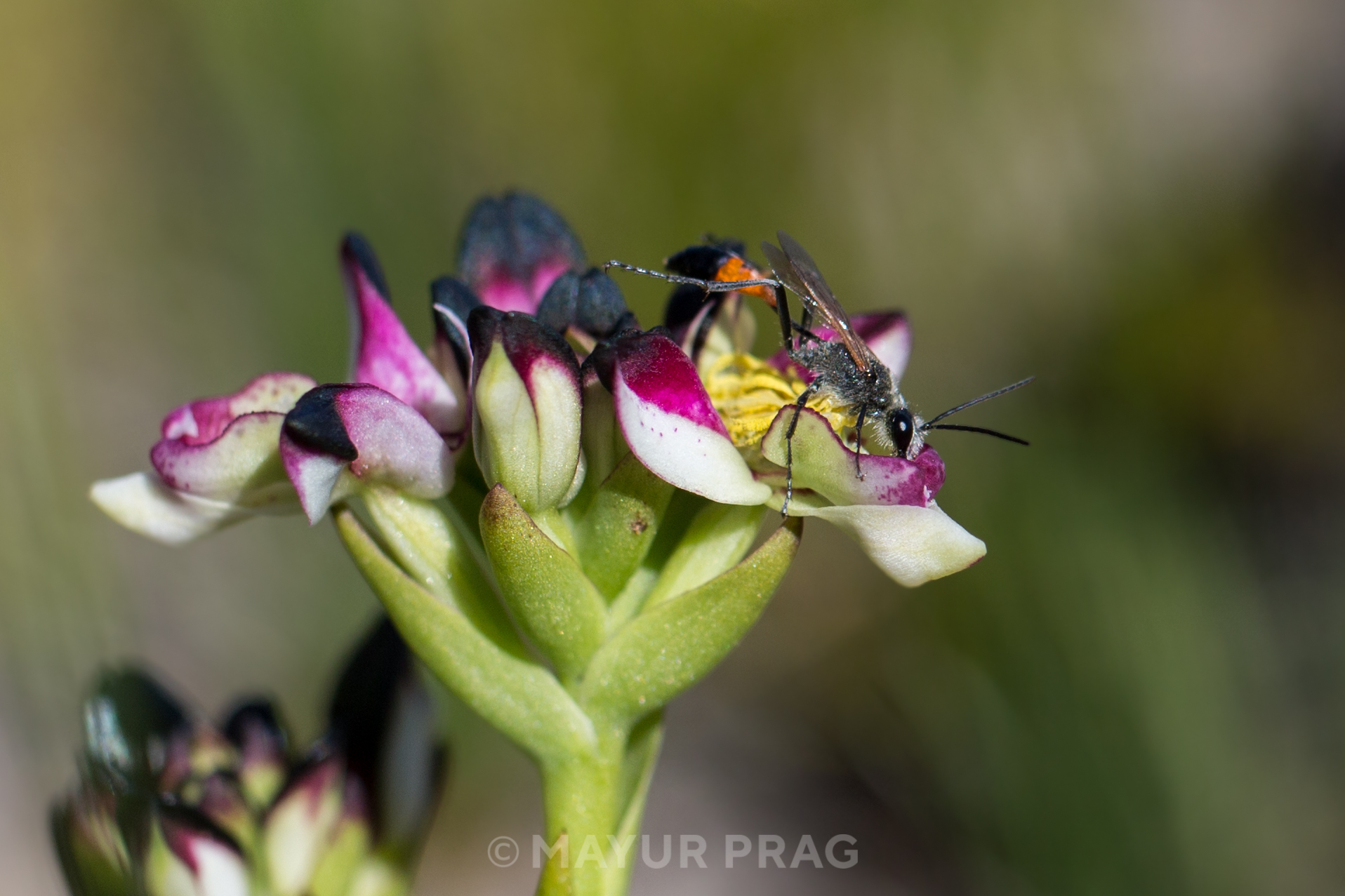
Excavate shallow, single celled nests in friable soil. The female provisions her nest with a single moth caterpillar usually of the family Noctuidae. The burrow shaft is filled in with raked soil and small pebbles, which are compacted by the female. Females hunt their subterranean cutworm prey by antennating on the surface of the ground. Once a caterpillar is detected she digs down, retrieves the prey and stings it multiple times. She carries the paralyzed caterpillar beneath her body and hides it while constructing the nest. The caterpillar is dragged backwards into the burrow and a single egg is laid on the first or second abdominal segment (Gess & Gess, 2014). Important pollinators of orchids (Steiner et al. 1994).

Female Podalonia canescens dragging captured and paralyzed caterpillar in Royal Natal National Park. Photograph © Steve Marshall (University of Guelph).


Male Podalonia canescens pollinating the sexually deceptive orchid Disa atricapilla. There are multiple pollinia attached to the wasp's underside. For details of this interaction see Steiner et al. (1994). Photograph © Mayur Prag.


References

Bohart, R.M. & Menke, A. S. 1976. Sphecid Wasps of the World: a Generic Revision. University of California Press, Berkeley, California.

Brothers D.J. 1999. Phylogeny and evolution of wasps, ants and bees (Hymenoptera, Chrysidoidea, Vespoidea and Apoidea) Zoologica Scripta 28: 233–250.

Finnamore, A.T. & Michener, C.D. 1993. Superfamily Apoidea (pp. 279-357). In GOULET, H. & HUBER, J. (eds). Hymenoptera of the World: an identification guide to families. Research Branch, Agriculture Canada, Ottawa, Canada, 668 pp.

Gess, S.K. & Gess, F.W. 2014. Wasps and bees in southern Africa. SANBI Biodiversity Series 24. South African National Biodiversity Institute, Pretoria. 320 pp.

Menke, A.S. 1966. The genera of the Ammophilini (Hymenoptera; Sphecidae). The Canadian Entomologist 98: 147-152.

Steiner, K.E., Whitehead, V.B., Johnson, S.D. 1994. Floral and pollinator divergence in two sexually deceptive South African orchids. American Journal of Botany 81: 185-194. https://doi.org/10.1002/j.1537-2197.1994.tb15428.x

Links

CATALOG OF WORLD SPHECIDAE sensu lato (= Apoidea excluding bees) compiled by
Wojciech J. Pulawski (California Academy of Sciences).

Credits

Photographs © Simon van Noort (Iziko Museums of South Africa), or © Steve Marshall (University of Guelph), or © Mayur Prag.

Map illustration © Simon van Noort (Iziko Museums of South Africa).


Web author Simon van Noort (Iziko South African Museum)


Citation: van Noort, S. 2026. WaspWeb: Hymenoptera of the World. URL: www.waspweb.org (accessed on <day/month/year>).

Copyright 2004-2026 Iziko Museums of South Africa

customisable counter